
Today: September 7, 2026
Reference: Jason Ma is the weekend editor at Fortune.
China’s export shock is pushing the global economy to a breaking point, and the U.S. may have to clean up the mess, former trade official says.
While President Donald Trump’s tariffs have caused much heartburn on Wall Street, China’s cheap and overwhelming exports have also been rippling through the global economy.
But the Chinese growth model is running out of road, setting the stage for another global economic crisis, according to Michael Froman, a former U.S. Trade Representative and current president of the Council on Foreign Relations.
Writing in Foreign Affairs last month, he warned “the world’s ability to absorb Chinese overcapacity is approaching a breaking point.”
For example, the International Monetary Funds estimated that global GDP growth is running around 3.1% this year, while China’s trade surplus expanded more than 20% in early 2026. That’s after China posted a $1.2 trillion trade surplus in 2025—the largest in recorded history—growing three times faster than global goods trade.
But the Chinese growth model is running out of road, setting the stage for another global economic crisis, according to Michael Froman, a former U.S. Trade Representative and current president of the Council on Foreign Relations.
Writing in Foreign Affairs last month, he warned “the world’s ability to absorb Chinese overcapacity is approaching a breaking point.”
For example, the International Monetary Funds estimated that global GDP growth is running around 3.1% this year, while China’s trade surplus expanded more than 20% in early 2026. That’s after China posted a $1.2 trillion trade surplus in 2025—the largest in recorded history—growing three times faster than global goods trade.
Now there’s widespread pushback against the flood of Chinese exports. Most notably, Trump hiked tariffs on China last year and made it the centerpiece of his “Liberation Day” trade war. But even once-stalwart defenders of open markets, like the European Union, are racing to put up trade barriers against China.
“The political appetite for accepting the deindustrialization and critical dependencies that come with the flood of Chinese imports is finite and shrinking,” Froman wrote. “As these trends continue, protectionism is likely to rise, cutting off Chinese manufacturers’ market access.”
Helped by an undervalued currency, Chinese companies charge as much as 30% less than rivals in other parts of the world. State subsidies and mandates from Beijing have also encouraged excess production and cutthroat price wars, forcing them to turn to export markets and resulting in nearly a third of Chinese industrial firms operating at a loss.
Add it all up, and China’s export machine is poised to stall as it nears the point where it basically runs out of customers, Froman explained.
“The result is an industrial machine that cannot stop and cannot slow down—but that, owing to the limits of demand, cannot keep going,” he added.
To be sure, Beijing has acknowledged it must rebalance its economy away from exports and industry, taking some steps to support consumer spending. China’s government is also trying to crack down on over-competition, or so called involution.
But Froman said China can’t fully commit to abandoning its export-led growth model, because it’s an economic grand strategy and a political project.
“As Beijing debates whether to embrace the reforms necessary to avert disaster, other countries are likely to try to stem the flow of Chinese exports,” he predicted. “Such moves could suddenly close off China’s access to a broad swath of foreign markets, accelerating the failure of its export-led growth model and raising the prospect of a global economic crisis.”
The fallout in China would see already-fragile businesses failing en masse, state-owned banks recording losses on “zombie firms,” cascading defaults in local government financing vehicles, and provincial revenues collapsing.
Meanwhile, China’s demand for raw materials and intermediate goods would dry up, hitting commodity-exporting economies and other developing countries that depend on China as a top trading partner.
But don’t expect China to come to the rescue, Froman wrote, pointing out Beijing has shown little interest in taking on the role the U.S. now plays in the global economy.
“Even if the next crisis is made in China, the cleanup is likely to fall, as it often does, on the United States and the institutions it anchors,” he said.
China shock 2.0
Others have sounded the alarm on the “China shock 2.0,” including Apollo chief economist Torsten Slok, who said last month the country is increasingly exporting the kinds of products that advanced economies once expected to dominate domestically.
Federal Reserve economists penned a similar note in May, finding that the products driving China’s export boom changed from labor-intensive goods in the early 2000s to capital- and tech-intensive industries now.
“Taken together, these elements suggest that ‘China Shock 2.0’ is not simply a continuation of earlier trends, but a new phase of global trade integration,” they wrote.
And last year, former Treasury official Brad Setser warned China’s flood of exports could pose the worst threat to the global economy, even eclipsing Trump’s tariffs.
Imports of manufactured goods into China have grown by an average of just $15 billion annually over the last six years, essentially unchanged after accounting for inflation. But exports from China have shot up by more than $150 billion.
Now, China alone has the capacity to produce two-thirds of the world’s demand for cars, Setser estimated. China also makes more than half the world’s supply of steel, aluminum, and ships.
“This points to a world economy in which China has no need for the industrial inputs of other countries while leaving those countries dependent on Chinese-made goods—and vulnerable to Beijing’s political and economic pressure,” he said in a New York Times op-ed.
Today: September 4, 2026
Reference: Zartonk Media
“Four Israelis were arrested over the weekend in connection with the August 2 attack on the Armenian Cathedral of St. James in Jerusalem’s Old City, weeks after six others were detained over the same incident. This was confirmed to Zartonk Media by Jerusalemite-Armenian journalist Kegham Balian.
Israel Police announced the arrests on Sunday, saying the four were among seven suspects detained over the weekend in cases involving religious sites and burial grounds in the Old City. The other three, all adults, were arrested on suspicion of vandalizing Muslim graves, in an incident police documented with footage showing three men kicking over a tombstone. All four, along with the three suspects in the cemetery case, were released under restrictive conditions after questioning.
In the August 2 attack, six Israelis, five minors and one adult, spat at the entrance of Saint James and threw stones at the compound. Balian, who published the surveillance footage, reported that the group also threw stones at the window of an Armenian woman filming them from her home while shouting, “Get back inside, you daughter of a whore!” The Jerusalem Post credited Balian by name for that account in its own coverage, as did the Times of Israel.
Three of those six were brought before the Jerusalem Magistrate’s Court, where police requested an extension of their detention. The other three were released under restrictive conditions, including orders barring them from the Old City for 15 days. Ten Israelis have now been arrested over the August 2 attack.
The Armenian Patriarchate of Jerusalem filed a formal complaint with Israeli authorities and issued a public appeal to US Ambassador to Israel Mike Huckabee, calling on him to condemn the attacks and press the Israeli government to prosecute them as hate crimes. “These are hate crimes anywhere in the West,” the Patriarchate said. “Why aren’t they hate crimes here?”
On August 26, Quds News Network published separate surveillance footage showing a settler spitting at the entrance of the cathedral, documenting an incident from the previous night.
On May 2, the Palestinian Jerusalem Governorate published footage of an Israeli settler spitting at the cathedral entrance and making obscene gestures at the camera that recorded him.
Israeli National Security Minister Itamar Ben Gvir, who oversees the police, has twice dismissed this conduct as a criminal matter.
In a 2017 interview with Ynet, Ben Gvir invoked what he called an ancient Jewish custom of spitting when passing priests or monasteries and argued that spitting to the side was not a crime.
In October 2023, as national security minister, he said that spitting at Christians should be condemned but did not warrant arrest and was not a criminal case.
On April 23, 2026, Foreign Minister Gideon Sa’ar appointed veteran diplomat George Deek to the newly created post of Special Envoy to the Christian World.
Deek had most recently served as Israel’s ambassador to Azerbaijan. Five days later, a French nun was assaulted on Mount Zion, and police arrested a 36-year-old suspect on suspicion of racially motivated assault.
On August 27, a Jerusalem court acquitted him on grounds of insanity and ordered psychiatric hospitalization for up to six years.
The Religious Freedom Data Center, an independent Israeli watchdog founded in June 2023 by the scholar Yisca Harani, recorded 50 anti-Christian incidents between April and June 2025. Sixty-four percent took place within the Old City, and half of those were centered around the Armenian Patriarchate, making it the most frequently targeted Christian site in Jerusalem…”.
Today: September 3, 2026
Reference: Reuters
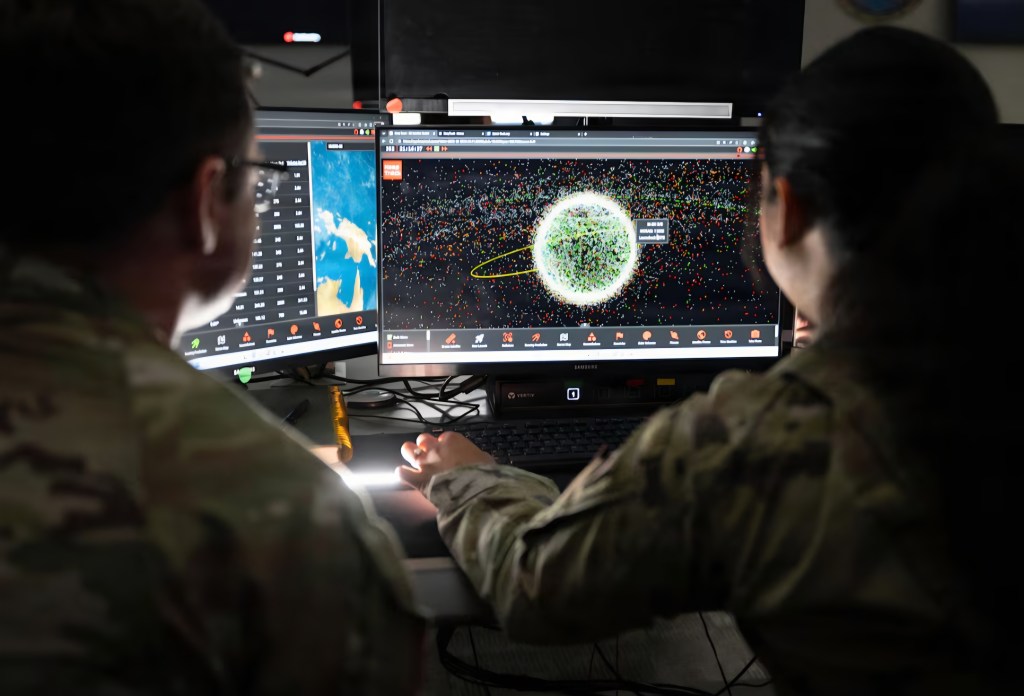
Amid the rapidly-evolving field of military space operations, Beijing and Washington are preparing for the possibility of conflict extending into space.
In June, a secretive unmanned Chinese spaceplane closely monitored by U.S. military analysts released a small satellite hundreds of miles above Earth in an orbital region crowded with commercial and military satellites. The object then looped around another Chinese satellite before returning towards the spaceplane, according to U.S. space-tracking firm LeoLabs.
Little is known about the satellite or the mission. But the U.S. military operates a similarly secretive spaceplane resembling a small shuttle, also with no crew. Both programs reflect the rapidly evolving field of military space operations as Beijing and Washington prepare for the possibility of conflict extending into space, according to a Reuters review of documents, space-tracking data and interviews with current and former military officials.
Chinese researchers linked to the military are developing technologies ranging from satellites designed to pursue and even capture other spacecraft to systems that could extend fuel supplies while doing so, according to a Reuters review of patent-related documents, procurement notices and academic papers. And the United States and Britain conducted their first joint military operation in space in the path of a suspected Chinese spy satellite, according to commercial space-tracking data.
Satellites have become indispensable to modern warfare, as conflicts in Ukraine and the Middle East have demonstrated. For decades they have provided communications, navigation and intelligence services to armed forces on Earth, and once placed in orbit typically remained on fixed paths. Increasingly, however, militaries view them as active weapons platforms capable of launching attacks by disrupting a satellite’s operations through jamming or laser dazzling, or even capturing enemy spacecraft.
Disruption of U.S. space capabilities would “cripple our massive military in the terrestrial sphere,” affecting everything from surveillance to missile defense, said Everett Dolman, a former professor at the U.S. Air Force’s Air War College. Spaceplanes, because they are agile and capable of deploying satellites or carrying cargo, could appear to opponents as potential “space fighters,” he said.
“The Chinese are rapidly developing capabilities,” including ground- and space-based weapons designed to interfere with or destroy targets, U.S. Space Force’s Chief of Space Operations General Chance Saltzman said in July. The threat from China is “substantial,” added Saltzman, who is retiring.
ALLIES JOIN THE U.S. EFFORT
The growing competition comes as Earth’s orbit becomes increasingly crowded. SpaceX, which recently debuted on public markets, operates about 11,000 Starlink satellites and plans a constellation of larger AI-enabled data centers in space. China is building rival networks, while U.S. President Donald Trump’s Golden Dome missile defense program envisions space-based interceptors.
The United States is also refining capabilities that could prove important in a future conflict.
In the joint U.S.-British operation in September last year, U.S. space forces working from a base in Colorado directed a U.S. military satellite to swoop in close to a UK one as China’s Shiyan 12-01 satellite passed about 83 kilometers beneath them, according to space intelligence company Slingshot Aerospace. At that altitude, specialists consider the distance relatively close.
Three space experts with military backgrounds told Reuters it appeared intended as a signal to Beijing, including at space-tracking firm COMSPOC. Andrew Turner, a retired senior British air force officer who is now a space consultant, said it was “almost certainly a strategic signal to China” to demonstrate allied unity, capability and a warning to not interfere with the UK satellite.
The U.S. and Britain publicly announced the operation, the first known one between two members of the “Five Eyes” intelligence alliance, but did not disclose its proximity to a Chinese spacecraft. Much of what occurs in space remains classified because of its intelligence implications.
U.S. Space Command told Reuters the mission demonstrated the ability to work with allies in space. Britain’s defense ministry said space is increasingly important to military operations and the UK and its partners were conducting advanced orbital operations to protect their national and military interests. Neither commented on the operation’s proximity to the Chinese satellite.
The U.S. Space Force’s next chief of space operations, Lieutenant General Douglas Schiess, had been involved in the operation. In an interview shortly afterward, he said operating close to another spacecraft could help verify whether an allied satellite is functioning properly or determine whether an adversary is “doing something it shouldn’t.” He declined to say at the time whether another country’s satellite had been nearby.
Britain recently disclosed that the mission was conducted alongside a maritime deployment to the Indo-Pacific region.
Using space not only to support military operations on Earth but also to influence their outcome is “really, really important,” then U.K. Space Command chief Major General Paul Tedman said in April at a conference. He has since retired from the military.
China’s foreign ministry said it was not familiar with the specific details of the U.S.-British operation. More broadly, Beijing opposes the weaponization of space and supports its peaceful use, the ministry said, while accusing Washington of stoking an arms race through efforts including the missile defense system Golden Dome and potential space-based weapons.
Asked about Shiyan 12-01 and the Chinese spaceplane, the ministry said it had no information. State news agency Xinhua has described Shiyan 12-01 as conducting space environment surveys, and the spaceplane as an experimental craft supporting the peaceful use of space.
U.S. Space Force says its own spaceplane is carrying out a range of tests and experiments.
SPACE WEAPONS
U.S. Space Command head General Stephen Whiting has repeatedly emphasized the importance of space to modern warfare, warning that adversaries are developing capabilities to deny the United States access to key systems and reduce military effectiveness. He has said adversaries would likely seek to target U.S. space assets early in a conflict.
To counter such threats, the U.S. must adopt a more active warfighting posture in space, Whiting argues. That means not only protecting U.S. systems but also being prepared to threaten or strike hostile assets if necessary. He has called for orbital interceptors and other weapons.
“We must be well-prepared for conflict in space. And if deterrence fails, we will fight and win,” he told a conference in April.
Western officials warn of a range of threats, including ground-based lasers, electronic jammers, cyberattacks and anti-satellite missiles.
In orbit, the United States, China and Russia all operate maneuverable satellites capable of approaching and inspecting other spacecraft. Such systems could be adapted to carry weapons, including lasers or projectiles. Western officials say Beijing and Moscow have demonstrated technologies that could be used to threaten U.S. and allied satellites.
The U.S. has also accused Russia of developing an anti-satellite capability involving a satellite designed to carry a nuclear weapon. Moscow has denied that it is developing a space-based anti-satellite nuclear weapon.
The UK’s Tedman, in an interview last fall, said militaries now see satellites as “weapons systems” that need to maneuver and fight. The West is “working hard to retain our strategic advantage in space,” he said.
Some specialists note that disrupting satellites remains easier from Earth than through spacecraft-on-spacecraft attacks.
In a rare disclosure about its own capabilities, the U.S. Space Force announced in June that it had introduced an earthbound electromagnetic weapon from L3Harris Technologies designed to disable or disrupt adversary satellites.
“DOGFIGHTING” AND HUNTER SATELLITES
Although the United States remains the world’s leading space power, China is rapidly expanding both the number of satellites it operates and the complexity of its missions.
Chinese satellites have demonstrated what U.S. officials describe as orbital “dogfighting,” which includes multiple satellites moving in a synchronized way in proximity. Chinese spacecraft have also shown the ability to capture a defunct satellite and move it into a different orbit.
Last year, China conducted what was likely an on-orbit refueling attempt, according to a U.S. Space Force official. Refueling would be a major breakthrough because satellites are normally constrained by the fuel they launch with. The ability to replenish fuel could determine whether a spacecraft remains a hunter or becomes the hunted.
Chinese institutions continue to pursue new capabilities. Patent-related documents show the maker of some of China’s most advanced military aircraft acquired technology that allows satellites to autonomously calculate fuel-efficient maneuvers while pursuing another spacecraft.

Reference: AP News
HAGUE, Netherlands (AP) – The Dutch central bank announced Wednesday that it has moved billions of dollars worth of its gold reserves out of North America in a move it described as “crisis preparedness” in a time of global political unrest.
It said that between March and August, some 86 metric tons (94.8 tons) of gold were transferred to London from the combined total of around 313 metric tons (345 tons) held in New York and Ottawa, Canada.
Before the move, New York housed 31.3% of the Dutch gold and Ottawa held 19.7%. After the move, both cities now hold 18.5%, the bank said.
The bank owns 612.4 metric tons (675 tons) of gold that was worth 72.2 billion euros (about $83.6 billion) at the end of 2025.
“With this relocation, we have improved the tradability of our gold reserves,” the bank’s governor, Olaf Sleijpen, said in a written statement. “We expect that we will never need to use them, but we do need to strengthen our resilience and preparedness.”
Today: September 2, 2026
Reference: Independent CO UK
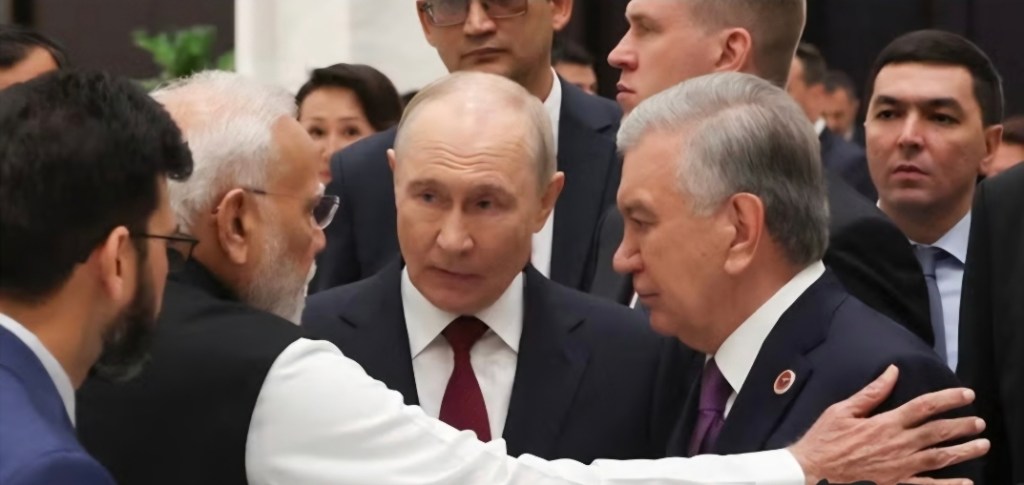
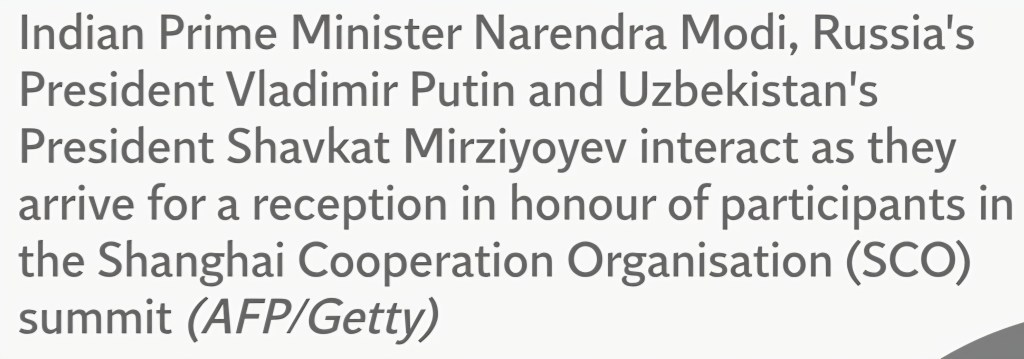
Narendra Modi gave Putin a short public lecture on how he’s got to end his war against Ukraine:
“Every day that the war continues, humanity is, in effect, set back a step, whilst every step towards peace gives all of humanity real hope for peace. We need to move from endless war to an end to the war, to a cessation of hostilities,” Modi told Putin.
Almost 40 per cent of the economy of the Russian Federation is dedicated to the war effort. More than 30,000 Russian soldiers are killed monthly for mimimal gains.
Today: August 31, 2026
Reference: Google
The question of whether an “Ayatollah” collaborated with the Nazis typically stems from historical confusion regarding three distinct figures:
- Grand Mufti Amin al-Husseini (The Actual Collaborator) People frequently confuse the title of “Ayatollah” with Hajj Amin al-Husseini, the Grand Mufti of Jerusalem.
Al-Husseini was an Arab Sunni religious leader—not an Iranian Shia Ayatollah. He was a prominent Nazi collaborator who fled to Berlin during World War II, met with Adolf Hitler, and actively broadcast Axis propaganda to the Muslim world. Because both men were turbaned Islamic leaders known for their fierce anti-Western and anti-Zionist rhetoric, they are often conflated in popular internet history.
- Ayatollah Ruhollah Khomeini (The 1979 Revolution Leader) While Khomeini did not collaborate with the Axis powers, historians note that as a young theology student, he—along with many in Iran—regularly listened to the anti-British, Persian-language propaganda broadcasts transmitted by Radio Berlin. This was driven primarily by widespread Iranian resentment toward British and Soviet imperial influence. However, this was limited to passive listening rather than active collaboration.
- Ayatollah Abol-Ghasem Kashani (The Pro-German Sympathizer) Another prominent Iranian cleric, Ayatollah Abol-Ghasem Kashani, did have tangible ties to wartime friction. Driven by intense anti-British sentiment, Kashani engaged in pro-German political agitation in Iran during the war. As a result, he was arrested and imprisoned by Allied forces during the 1941 Anglo-Soviet invasion of Iran.
While his actions were viewed by the Allies as helping the enemy, he was operating out of an anti-colonial desire to remove the British from Iran rather than serving as an official operative for the Nazi regime.
August 29, 2026
Reference: Reuters
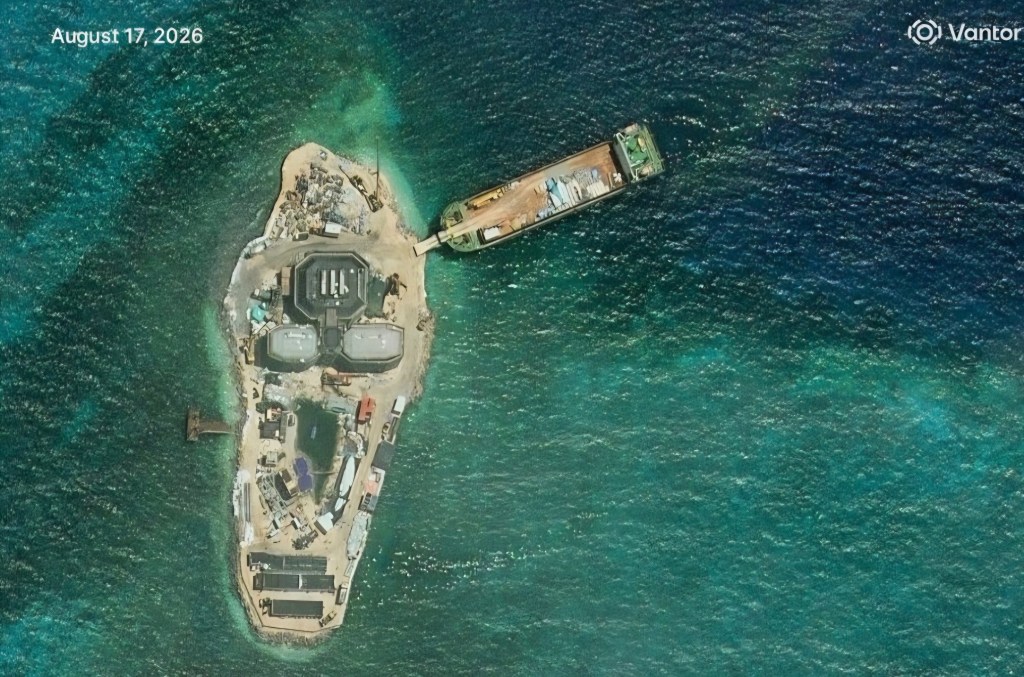
HONG KONG – New installations have been sighted on an islet near Antelope Reef in the Paracels archipelago of the disputed South China Sea where analysts believe China is building its largest military base, according to satellite imagery reviewed by Reuters.
Security analysts say while it is too early to gauge definitively the likely function of the three-pronged construction on Yagong Island, it could be the start of an early warning radar facility to support eventual installations on Antelope Reef.
Vantor, a commercial provider of satellite images, said it took the latest image on August 17, noting in other images that construction started in March and April.
While the purpose of the buildings was not certain, “several structures on Yagong Reef resemble other military radar/early warning facilities seen elsewhere in the South China Sea and are likely associated with the ultimate military functions of nearby Antelope Reef,” a Vantor spokesperson said.
Reuters reported last week that China had completed the first phase of construction at Antelope Reef, highlighting the South China Sea as an increasingly militarised arena between China and the United States and its allies — and one that could prove critical in any future conflict over Taiwan.
The Antelope Reef images showed an artificial island nearly 6 km (4 miles) long, with a straight line of coast longer than 3 km (2 miles) that some analysts see as a potential runway.
Yagong is far smaller, 14 km to the northeast of Antelope. Both lie within the Crescent Group in the western Paracels.
August 27, 2026
TODAY: AUGUST 24, 2026
“Defining Adaptation”
Practical Applications to Survive During a Season of Malevolent Tarrif Policies. By Bruce J Snider
A broader effort to diversify one’s trade relationships are required and nessesary to survive under current U.S. Administrations trade and tarrif policies.
It will take time to restore some resemblance of normality and stability after this administration changes hands.
Bad Company Corrupts Good Morals.
TODAY: August 17, 2026
Reference: Melissa Steinberg.

The King of Mecca and the Newspaper Line Everyone Forgot
In March 1918, the ruler of the Hejaz sat down and wrote something that would be inconvenient for a lot of people a hundred years later.
Sharif Hussein bin Ali was not a minor figure. He was the Sharif of Mecca, guardian of Islam’s two holiest cities, and by then King of the Hejaz. He had just led the Arab Revolt against the Ottomans. His name carried weight across the Arab world, and so did the paper he controlled: Al Qibla, the official gazette of his kingdom, printed twice a week out of Mecca.
On March 23, 1918, an article ran under his name. It talked about Palestine. And it did not talk about Palestine the way modern politics assumes it must have.
Hussein called Palestine “a sacred and beloved homeland” for its original sons. He was talking about the Jews. He wrote that the return of these exiles to their homeland would benefit the whole region, Arabs included. He told the Arabs living in Palestine to welcome the Jewish return as brothers and work alongside them for the common good.
The most prominent Arab leader in the world, months after the Balfour Declaration, publicly framed Jewish return to Palestine as a homecoming, not an invasion.
Two months earlier, the British had sent an envoy named David Hogarth to Hussein with a careful message. Jewish political and economic freedom in Palestine was not up for debate, Hogarth told him. Hogarth was precise about what he did and did not say. He never told Hussein that Britain was planning an independent Jewish state. That distinction gave Hussein room to frame Zionism his way in his own newspaper: not a rival claim to sovereignty, but a displaced people returning to a land they’d never stopped belonging to.
This wasn’t an isolated gesture, either. A year later, Hussein’s son Faisal sat down with Chaim Weizmann and signed an agreement built on the same premise. Arabs would accept the Balfour Declaration. Zionists would back an independent Arab state across the rest of the former Ottoman lands. Two peoples, two returns, one understanding that neither had to come at the other’s expense.
None of this held. The Syrian National Congress pushed Faisal to walk his support back. The postwar carve-up of the Middle East broke promises made to nearly everyone, Hussein included. By 1920 the moment had passed, and the alliance Faisal and Weizmann built was already a dead letter.
But the article in Al Qibla still happened. The words are still there, attested by historians who worked from the original Hejazi record. Isaiah Friedman documented it. It’s cited in the scholarship on the Faisal-Weizmann agreement. It is not a myth invented by one side of a modern argument. It is a newspaper article, written by a king, printed in his official paper, in his capital, in his language.
Al Qibla was Hussein’s mouthpiece, and the British helped distribute it. That doesn’t make the words fake. Governments have always used friendly presses to say true things they also find useful. It does mean this wasn’t a naive slip from a leader who didn’t know what he was saying. Hussein knew exactly what he was putting his name to, and he put it in print anyway.
A hundred years of conflict have made it easy to assume this land was always a zero sum fight between two peoples who never once recognized each other’s claim to belong there.
Sharif Hussein’s newspaper says otherwise. For one article, in one spring, before the borders were drawn and the wars began, the King of the Hejaz called the Jewish return to Palestine a homecoming and asked his own people to welcome it.
That sentence exists. Whatever came after it doesn’t erase that it was written.
TODAY: August 6, 2026
Reference: John Spencer @ SpencerGuard & The Washington Post
“Trump should stop negotiating and win against Iran,” General Keith Kellogg – Great article. I fully agree. American deterrence power at stake.
The American way of war from the Revolutionary War to World War II was straightforward. We did not fight to negotiate; we fought to win.
Bring the American people along in the decision process. History has shown that Americans will sacrifice when they are brought to understand the gravity of the situation. When Americans understand that we are fighting for tomorrow and not for today, they will rally. Americans always believe in an end state that improves the future for our children and grandchildren, namely, a world of increased safety and prosperity. The president needs to explain why the fight in Iran is that fight.
Second, you cannot prosecute a war like a business deal. War is too difficult to leave to chair-bound critics, people who lack an understanding of the principles of conflict or those who contemplate dollar signs rather than strategy. This is especially true of proactive military action, or a war of choice. This is also why this war must be won, not managed. Wars of choice carry a higher threshold. Choosing to go is different from being forced to go or acting in self-defense; this is why winning matters even more. Losing a war of choice erodes deterrence more rapidly and diminishes a nation’s ability to project power.
TODAY: August 5, 2026
(Reuters) – FBI Director Kash Patel says he has forged new law enforcement partnerships with China and Russia, two longtime U.S. rivals, over the past year in hopes of gaining allies in combating transnational crime including fentanyl, cyber fraud and child sexual exploitation.
TODAY: August 3, 2026
Reference: Reuters
JPMorgan (JPM.N) said on Monday it was planning to deploy more than $750 billion into housing through 2035, in a push to increase supply and support homeownership in the U.S.
Reference Reuters: Leika Kihara, Makiko Yamazaki, Tamiyuki Kihara
LONDON – Traders grappling with an already rare co-ordinated U.S.-Japanese action to prop up the weak yen are also digesting a further unusual dynamic: the U.S. selling euros.
Japan confirmed on Monday it had carried out yen-buying intervention on Friday with the U.S. Treasury department. But rather than buying yen and selling dollars, two market sources told Reuters the Treasury had instead bought yen for euros, confirming an earlier Financial Times report.
Analysts at HSBC said this was “a highly unusual — maybe unprecedented — step”.
“Given that at the moment the U.S. has above target inflation, a weaker dollar right now isn’t the best thing for them,” said Lee Hardman, senior currency analyst at MUFG.
The move likely reflects a desire by U.S. authorities to help Japan strengthen the yen but not encourage a view that Washington wants a softer dollar — which would only complicate efforts to rein in above target inflation, currency analysts added.
A bump to inflation from a broadly weaker dollar could give a divided Federal Reserve more cause to raise U.S. interest rates.
Japan’s Ministry of Finance also intervened in markets on Thursday and in addition to Friday’s action, there were further sharp moves on Monday that were potentially intervention-driven.
Japan’s Ministry of Finance also intervened in markets on Thursday and in addition to Friday’s action, there were further sharp moves on Monday that were potentially intervention-driven.
“The choice of intervention currency by the U.S. Treasury avoids signaling a desire for broad-based dollar weakness, in our view, keeping the operation a yen-only affair,” Barclays analysts said in a note.
Moves in one currency pair shake out across the market near instantaneously as banks and traders reprice what a move in euro/yen for example means for the dollar/yen and euro/dollar exchange rates.
The euro has fallen from as high as 187.4 yen on Thursday to dip briefly below 180 on Monday, an over 4% move.
TODAY: July 25, 2026
Reference: Google
Trump’s tariffs have cost Amt American consumers and businesses between $231 billion and $264 billion in and $264 billion in gross costs during his second term alone which translates to an average household of $1,000 to $1,745 annually.
Total Financial Impact
- Gross Tariff Collections:
- The federal government collected roughly $264 billion in gross tariff revenues during the 2025 calendar year.
- Total Consumer Expenses: The U.S. Congress Joint Economic Committee calculated that between February 2025 and January 2026, American consumers paid more than $231 billion in direct tariff pass-through costs.
- Net Revenue: Due to economic distortion and lower payroll/income taxes caused by reduced corporate margins, the Tax Foundation estimates the government only netted about $38 billion from new permanent Section 232 tariffs in 2025.
- Gross Tariff Collections: The federal government collected roughly $264 billion in gross tariff revenues during the 2025 calendar year.
- Total Consumer Expenses: The U.S. Congress Joint Economic Committee calculated that between February 2025 and January 2026, American consumers paid more than $231 billion in direct tariff pass-through costs.
- Net Revenue: Due to economic distortion and lower payroll/income taxes caused by reduced corporate margins, the Tax Foundation estimates the government only netted about $38 billion from new permanent Section 232 tariffs in 2025.
Average Household Costs
- 2025 Average Costs: Studies by the Tax Foundation placed the initial average 2025 burden at $1,000 per household.
- JEC Estimates: The Joint Economic Committee calculated a higher annual cost of $1,745 per family by early 2026.
- 2026 Projections: Current 2026 estimates from the Yale Budget Lab and the Tax Policy Center project ongoing annual costs of $1,100 to $1,300 per household under the revised average 11% tariff rate.
- Tax Cut Offset: Economists from the Federal Reserve Bank of New York noted that the average $1,500 household inflation impact completely wiped out Trump’s signature income tax cuts.
- 2025 Average Costs: Studies by the Tax Foundation placed the initial average 2025 burden at $1,000 per household.
- JEC Estimates: The Joint Economic Committee calculated a higher annual cost of $1,745 per family by early 2026.
- 2026 Projections: Current 2026 estimates from the Yale Budget Lab and the Tax Policy Center project ongoing annual costs of $1,100 to $1,300 per household under the revised average 11% tariff rate.
- Tax Cut Offset: Economists from the Federal Reserve Bank of New York noted that the average $1,500 household inflation impact completely wiped out Trump’s signature income tax cuts.
Specific Price Inflation
- New Automobiles: Import duties added $1,600 to $6,000 to new car prices according to Kelley Blue Book data.
- Apparel and Goods: Federal Reserve economists tracked a 3.1% inflation jump on core consumer goods. Specific consumer segments saw sharp increases, including shoe prices rising 39% and coffee rising 34%.
- Lower-Income Impact: The Tax Policy Center reports the bottom 10% of earners paid three times more of their relative income toward tariffs than the wealthiest 10%.
- New Automobiles: Import duties added $1,600 to $6,000 to new car prices according to Kelley Blue Book data.
- Apparel and Goods: Federal Reserve economists tracked a 3.1% inflation jump on core consumer goods. Specific consumer segments saw sharp increases, including shoe prices rising 39% and coffee rising 34%.
- Lower-Income Impact: The Tax Policy Center reports the bottom 10% of earners paid three times more of their relative income toward tariffs than the wealthiest 10%.
Regulatory Shakeup & Refunds
- Supreme Court Ruling: On February 20, 2026, the Supreme Court ruled 6-3 that Trump’s use of the International Emergency Economic Powers Act (IEEPA) to bypass Congress for broad tariffs was unlawful.
- Forced Refunds: As a result of the ruling, the federal government is legally required to refund approximately $166 billion collected from those unlawful IEEPA tariffs back to domestic importers.
- Replacement Taxes: The administration immediately enacted alternative Section 232 and forced-labor tariffs ranging from 10% to 12.5% across 60 trading partners. This structure effectively holds the effective baseline import tariff rate at roughly 11.7
- Supreme Court Ruling: On February 20, 2026, the Supreme Court ruled 6-3 that Trump’s use of the International Emergency Economic Powers Act (IEEPA) to bypass Congress for broad tariffs was unlawful.
- Forced Refunds: As a result of the ruling, the federal government is legally required to refund approximately $166 billion collected from those unlawful IEEPA tariffs back to domestic importers.
- Replacement Taxes: The administration immediately enacted alternative Section 232 and forced-labor tariffs ranging from 10% to 12.5% across 60 trading partners. This structure effectively holds the effective baseline import tariff rate at roughly 11.7
TODAY: July 19, 2026
Reference: Google
IDF’s diversity is integrated across several areas:
- Demographics: Soldiers hail from diverse origins including Ethiopia, Morocco, Yemen, the former Soviet Union, and India, reflecting the heterogeneous nature of Israel’s population. [1]
- Religious Inclusion: The military includes a significant contingent of Druze soldiers, who boast high enlistment rates, alongside Bedouin Muslims, Christians, and Messianic Jews. [1, 2, 3]
- Women in Service: Women make up more than 30% of the total force and are integrated into over 90% of roles, including frontline infantry, air force pilots, intelligence, and tank brigades. [1, 2, 3]
- Special Needs Integration: The IDF accommodates and trains individuals with developmental disabilities and autism through programs like Special in Uniform
- Demographics: Soldiers hail from diverse origins including Ethiopia, Morocco, Yemen, the former Soviet Union, and India, reflecting the heterogeneous nature of Israel’s population. [1]
- Religious Inclusion: The military includes a significant contingent of Druze soldiers, who boast high enlistment rates, alongside Bedouin Muslims, Christians, and Messianic Jews. [1, 2, 3]
- Women in Service: Women make up more than 30% of the total force and are integrated into over 90% of roles, including frontline infantry, air force pilots, intelligence, and tank brigades. [1, 2, 3]
- Special Needs Integration: The IDF accommodates and trains individuals with developmental disabilities and autism through programs like Special in Uniform
“Bevor ihr urteilt, kommt nach Israel. Schaut euch das Land mit eigenen Augen an. Allein die Tatsache, dass ich eine Araberin bin, Muslima, Israelin und gleichzeitig Offizierin der israelischen Streitkräfte bin und in den sozialen Medien öffentlich auftrete, vermittelt eine Botschaft darüber, was Israel ist und was die IDF ist”, sagt Ella Waweya im Interview mit @cicero_online.
Waweya ist die ranghöchste arabisch-muslimische Offizierin der IDF.
Der Link zum ganzen Interview im ersten Kommentar.
English Translation:
“Before you judge, come to Israel. See the country with your own eyes. The mere fact that I am an Arab, a Muslim, an Israeli, and at the same time an officer in the Israel Defense Forces, and that I am active on social media, conveys a message about what Israel is and what the IDF is,” Ella Waweya said in an interview with @cicero_online.
Waweya is the highest-ranking Arab-Muslim officer in the IDF.
The link to the full interview is in the first comment.

https://x.com/i/status/2077031656368529532
TODAY: June 16, 2026
Ref: Israel News Pulse
“American cardiologist Dr. Afshin Emrani, an Iranian-born Jew who fled Iran after the 1979 Islamic Revolution, published a lengthy statement shared by U.S. Ambassador to Israel Mike Huckabee.
Emrani argues that October 7 marked the beginning of a new era in which Israel is increasingly forced to stand on its own. He acknowledges the disappointment felt by many Israelis following the U.S.-Iran agreement, but warns against turning on President Trump without fully understanding the deal.
According to Emrani, Trump weakened Iran more than any American leader in decades by forcing Tehran to negotiate from a position of weakness. However, he argues that Trump must also consider U.S. economic and political interests as President of the United States.
The central message of the article is that Israel was never meant to depend indefinitely on any foreign power, including the United States. Emrani writes that decisions about Israel’s survival must ultimately be made in Jerusalem, not Washington, and that true sovereignty requires the ability to act independently when necessary.
He also describes Iran as a regime that appears strong but is internally fragile, relying on fear, economic weakness, and a population that increasingly rejects it. Emrani believes the Iranian regime could collapse within the coming years.
Concluding on an optimistic note, he argues that Israel’s greatest strengths are its resilience, innovation, medicine, technology, and moral clarity. He urges Israelis to remain patient and confident, saying that despite current challenges, the country’s best days are still ahead.”
Statement by Prime Minister Benjamin Netanyahu at the press conference last night:
”Dear citizens of Israel,
For decades, I have been fighting against Iran’s efforts to arm itself with nuclear weapons. I can define it as my life’s mission. I have met this challenge to this day, and I will continue to meet it in the future. With an agreement, without an agreement – Iran will not have nuclear weapons. Not today, and not tomorrow. As long as I am Prime Minister of Israel – this will not happen.
I hear people asking: What have we achieved? And my response to them is: “What have we achieved”?! We have fended off an immediate threat of annihilation. Together with our American friends, we launched the largest offensive air operation in Israel’s history. We neutralized nuclear scientists, decapitated the leaders of the terror regime, pulverized nuclear facilities, destroyed missiles and the vast majority of the factories that produce them, struck countless military industries and infrastructures, destroyed their navy, their air force, neutralized Basij commanders who massacred the Iranian people, and caused enormous damage. We estimate it in the hundreds of billions of dollars, and some even estimate it to be closer to a trillion dollars – enormous damage to the economy of Iran that took them decades to build.
But here is the most important thing: we saved the State of Israel from the threat of nuclear annihilation. Because, it is crucial to understand, Iran was racing toward a nuclear weapon just before Operation Rising Lion; it was racing toward a nuclear weapon and racing to bury its missile and nuclear industry deep underground.
If we had not acted at the time we did, and with the overwhelming force with which we did – both in Operation Rising Lion and later in Operation Roaring Lion, in historic cooperation with President Trump and the American military – if we had not acted in this way, Iran would already have atomic bombs. And what does that mean? It means that millions of Israeli citizens, you who are listening to me now, you would all have been in terrible danger of mass death. All of us would have been in that danger. And this danger, of the elimination of Israel’s population, we have fended off for years to come. That is what we have achieved – we saved the State of Israel from annihilation.
But I tell you, citizens of Israel, the struggle is not over and done. We will need to maintain our vigilance, remain strong and determined to defend ourselves as required. This is true not only vis-à-vis Iran. This is also true vis-à-vis Iran’s terror proxies, which we have hit in an unprecedented manner. We did it in Gaza, we did it in Lebanon, in Syria, in Yemen, we did it in the refugee camps in Judea and Samaria – we did it everywhere.
We eliminated Deif, Haniyeh, and Sinwar, along with many of Hamas’s leaders. Actually, almost everyone who was there during the horrific massacre; I think there is one more left, he too will be eliminated. We destroyed thousands of terrorists and countless terror infrastructures. We returned all our hostages from Gaza, down to the very last one. No one believed we would do that. I did.
I was told: Prime Minister, we must give up, don’t enter Rafah, end the war – we will bring the hostages and we will frame our exit from Gaza as a victory. I did not accept this nonsense. We entered Rafah, we entered Gaza City, contrary to the opinions of many – and we returned all the hostages, to the last one. And not only that, we exploded the pagers, we eliminated the arch-enemy Nasrallah, we prevented the invasion of the Radwan Force into the Galilee, we destroyed the vast majority of the 150,000 rockets and missiles that Nasrallah built in order to devastate the cities of Israel.
You remember what we were told: If we go to battle with Hezbollah, we will have tens of thousands of casualties, the towers will come down in Tel Aviv, in Haifa, in Jerusalem, in Be’er- Sheva; Israeli cities will be reduced to ruins. You remember that. I did not accept that, we fought them, and we fought them hard; we also captured their key positions like the Beaufort, which Hezbollah had used for years to threaten the northern communities, and in fact the entire country.
Simultaneously, we did another thing: we established deep security zones around the State of Israel. We did it in Gaza, in Lebanon, in Syria – where, by the way, we destroyed all the weaponry of the Assad army, which was a central link in the Axis of Evil. And I wish to clarify: we will remain in the security zones for as long as it is required to defend our country. Because after October 7th, I established a simple principle: Israel will not allow terror organizations to encamp on our borders; to tunnel into our territory; to prepare for a massacre close to our citizens. Today, the heroic IDF fighters stand as barrier between the terrorists and our citizens.
What we did, in fact, was change our entire security doctrine; change ourselves as well. We broke the barrier of fear. We take initiative, we attack, we surprise, and we strike at those who threaten our lives.
Israel is stronger than ever, and Iran’s Axis of Evil is weaker than ever. If someone had told you at the beginning of the war that we would achieve everything I have detailed, and I haven’t detailed everything – you would have said they were hallucinating. Just talk, just promises – no, we did all that. And today, after we have achieved all this, there are those who want to minimize it, to dismiss our tremendous achievements. And I tell you: we are going to achieve many more great things.
We will continue to neutralize threats in the region, we will build new alliances with countries in the region and beyond. We will ensure our own domestic armament independence, this is another principle I established, and I am investing 350 billion NIS in that, as a supplement to the defense budget. We will develop technologies that break the boundaries of imagination, and we will turn Israel into an even stronger power. Because our strength is the key to our future, it is the key to our security, it is the key to our economy, it is the key to our alliances. Because alliances are made with the strong, and Israel today is a very strong country. It is strong thanks to you, citizens of Israel.
I wish to thank you, citizens of Israel, for your steadfastness, for the support you give to the government and for the support you give me as the Prime Minister. And above all, I wish to thank our heroic fighters, men and women in active duty and in the reserves, at sea, on land, and in the air, in the IDF and in all the security branches. There is no one like you, heroes of Israel. Together we will continue to stand, and together we will continue to win.
“Fear not, O Jacob My servant, and be not dismayed, O Israel!”
Together, with God’s help, we will ensure the eternity of Israel.”
TODAY: June 15, 2026
@itamarbengvir Minister of National Security. Chairman of Otzma Yehudit.”Trump’s agreement does not bind us. Israel is not subject to the United States, and we are an independent and sovereign nation!
Our duty is to the citizens of Israel, to the soldiers of the IDF, and to the Jewish people, and our historical duty to the persecuted and murdered Jews over thousands of years of exile, to provide security to Jews in the Land of Israel.
Every time we succumbed to international pressure at the expense of Israel’s security, we paid a blood price with interest. It was true in the Oslo Accords, it was true in the Lebanon agreement in 2006, and it was true in every period of containment in Gaza that exploded in our faces.
We emphasize: We love the USA and are grateful to President Trump. And yet, the State of Israel is not a banana republic.
I say these things to the Prime Minister all the time, and repeat them in closed rooms at every important historical juncture: In historical moments, a historical decision must be made.
My position is clear: We are not partners to this agreement that does not ensure our security, and it does not bind us in any way. We must not compromise on anything less than the dismantling of Hezbollah, we must not withdraw from any territory that our fighters have captured and cleared of terror infrastructure, we must not return to a situation where thousands of terrorists sit on the fences of northern settlements, and certainly we must not remain silent for a moment in the face of fire directed at the State of Israel.
We must make it clear: Every launch of a drone, UAV, or missile toward Israel from Lebanon will lead to an Israeli strike in Dahiya. That was the deterrence balance just a few months ago, and we must not give it up in any way.
And above all, we must make it clear to everyone: The people of Israel is a people of 3,000 years, the eternal people that does not fear a long road; we have faith in the Creator of the Universe, we are a strong and proud people that returned to its homeland strong and proud, and does not intend to lower its gaze before enemies anymore. The days are over when the Jew took blows and kept silent. Never again!”
@SpencerGuard War Scholar | Chair of War Studies Madison Policy Forum
“Much of the debate over U.S. aid to Israel starts with a misconception. Under current agreements, nearly all Foreign Military Financing is spent on American-made defense products, supporting U.S. factories, supply chains and jobs while strengthening a key alliance in the Middle East.”
 thenewsanalyst.com